How Assisted Living Uses Light Household Chores as Gentle Exercise
If you think about exercise only in terms of gym equipment, trainers, and long routines, it might be time to reconsider. Not every workout needs to look or feel like a fitness class. In reality, most of the basic activities of daily life, folding a towel, carrying a plate, and watering a plant, are already considered exercise. For seniors in assisted living, these light chores can hit that balance of movement, purpose, and ease.
Light household chores are often used as a natural form of exercise. They’re gentle, purposeful, and adaptable to your ability. And more than that, they carry meaning, helping you feel involved rather than “put through a workout.”
In this article, we’ll explore how assisted living turns simple chores into gentle exercise, why it works, and what you and your family should look for when choosing a community.
Why Gentle Movement Matters for Seniors in Assisted Living
Movement in later life isn’t about chasing athletic goals. It’s about supporting your independence, maintaining steadiness on your feet, and keeping your energy levels at a nice, comfortable place. Every little bit of movement helps to raise a little circulation, decrease stiffness, and relieve joint discomfort. Spending even a few minutes a day stretching, lifting, or walking lightly can make a huge difference in how your body feels.
Gentle movement also affects mood. Seniors who engage in some activity regularly, even at a very low level, generally report higher alertness and lower sluggishness levels. Gentle physical activity supports better sleep quality and reduced daytime fatigue levels. Not to mention the practical side of things. The more you can move in a day, the easier it becomes to do the little things that matter to you every day.
The hard part is that only a few people like or want to be in “exercise” programs. The idea of “working out” can feel unimportant or discouraging to many people. Whereas when activity is disguised as something useful, like a chore, group task, or shared responsibility, it can feel much more natural. This is why light household chores blend well into assisted living as forms of gentle exercise for residents.
Examples of Household Chores That Double as Gentle Exercise
The chores built into assisted living routines are not about lifting heavy objects or mopping floors. Rather, they are lighter, supportive tasks that help keep the body active while maintaining safety. Here are a few examples:
- Folding laundry: lifting, stretching, and reaching for clothes builds gentle arm and shoulder movement. Folding also helps with coordination and fine motor skills.
- Setting or clearing a table: small walks back and forth, lifting plates, and reaching across a surface create natural motion.
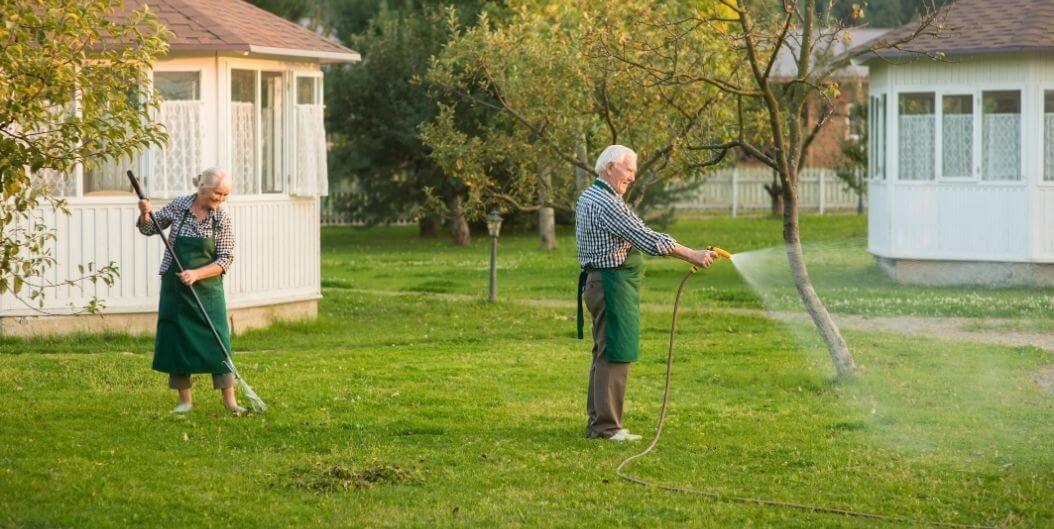
- Watering plants: bending slightly, carrying a light watering can, and stretching to reach a plant provides balance and light strength.
- Light sweeping or dusting: simple repetitive motions in the upper body promote circulation and keep muscles active.
The point of every task is not whether the task is completed quickly but whether it promotes natural movement. In every situation, the tasks are optional and fully supported. No one is required to participate, and staff try to match the task to the comfort level of each person.
How Staff Support Chores as Exercise
The success of chore-based activity lies in how it’s presented. In assisted living communities, staff frame these tasks not as obligations but as contributions. You’re not “being made to exercise,” you’re helping in ways that feel useful and familiar.
Safety is always central. Communities provide adaptive tools, like lightweight watering cans or dusters with long handles, so there’s no risk of strain. Chores can be done seated if balance is a concern. And staff are nearby to ensure each movement is safe, stepping in as needed.
Gentle repetition is encouraged. Folding multiple towels, for example, becomes a form of low-impact strength training for the arms and shoulders. Sweeping small areas provides consistent but light resistance. The key is making it feel natural, never forced.
Benefits Beyond the Physical
The physical gains from light chores are important, but the deeper benefits often go beyond movement.
- A sense of purpose. Exercise can sometimes feel like a task done “to” you. But folding laundry, helping set a table, or watering plants feels like a contribution. These actions build purpose into the day, giving you something to take pride in.
- Social connection. Many chores in assisted living are done in groups. Folding laundry with a few neighbors or working together in a shared kitchen invites conversation and companionship, which is an indication of how assisted living can enhance your quality of life.
- Mental stimulation. Routine tasks can trigger familiarity. Folding clothes may spark memories of caring for your family. Dusting or cooking prep may recall earlier routines. These associations help keep the mind engaged.
- Emotional health. When you’re able to participate, even lightly, it reinforces the sense that you’re still capable and valued. That feeling carries through the rest of the day.
These benefits add layers of support, proving that chores as exercise aren’t just about muscle; they’re about the whole person.
What You Should Look for in an Assisted Living Community
If you’re visiting an assisted living community, pay attention to whether light household chores are integrated into daily life. It’s an easy way to measure whether a community values purposeful activity alongside formal wellness programs.
Ask directly:
- Does the community encourage light chores as part of wellness programming?
- How are residents supported if they want to take part but need adaptations?
- Are there seated or tool-assisted versions of chores?
- Do staff create these opportunities naturally, or is all activity structured in formal classes only?
Observe when you tour: Are residents casually involved in folding towels or helping in the dining room? Does staff seem supportive, or does it look more like a chore being “assigned”? Look at whether these moments feel positive and optional, because that’s what makes the approach work.
Come Experience How Everyday Chores Keep Residents Active at Lyndale Abilene. Book Your Visit Today!
At Lyndale Abilene Senior Living, chore-based activity is part of everyday life. The community weaves in light household chores as opportunities for light movement and engagement. Residents might be watering plants in a shared living area, helping set a table before a meal, or folding towels with friends in a shared space. Each chore-based activity is designed to keep each resident safe, optional, and rewarding.
The staff support participation by creating a social and relaxed environment for chores. They supervise for safety, alter tasks for varying ability levels, and ensure that those who want to help are engaged in the task. It is not about being perfect; it is about providing opportunities for all to be included in the facilitations of their health.
If you are thinking about relocating, look for communities that incorporate wellness into daily life. Gentle movement, with staff support, and at your own pace, can help add energy and meaning to every day.
At Lyndale Abilene Senior Living, residents engage in safe, supervised light chores because this is part of their wellness-focused lifestyle. That’s the great thing about wellness-focused activity. You really are exercising without it feeling like exercise; you are moving, you are contributing, you are part of something.
We hope you come see for yourself! We invite you to schedule a tour, watch a group activity in action, or even participate in the visit with us. You will see that movement in assisted living can feel easy and fulfilling, because exercise is not just about your health; it’s about your life.